
Football Betting Markets Explained: Corners, Cards and Handicap
Football betting is often associated with predicting the final score, but there are many other ways to describe what might happen during a match. Some markets focus on goals, while others concern corners, disciplinary cards, team performance or the margin between the two sides.
Understanding football betting markets is important before comparing odds or selecting an outcome. Two selections may relate to the same fixture but depend on entirely different events.
For Nigerian football fans exploring online sports betting, this guide explains the most common football betting markets, how their selections work and the details worth checking before interpreting a betting slip.
1. What Is a Football Betting Market?
A football betting market defines the specific event or outcome covered by a selection.
For example, predicting the winner of a match is different from predicting the number of goals scored. A corners market concerns corner kicks, while a cards market concerns disciplinary events under the applicable settlement rules.
Each market has its own conditions for determining whether a selection wins, loses or is settled in another way.
Some common football betting markets include:
- Match result (1X2)
- Double Chance
- Over/Under Goals
- Both Teams to Score (BTTS)
- Correct Score
- Total and Team Corners
- Cards
- Asian Handicap
- First-Half and Second-Half Markets
Before choosing a selection, read its full description. Similar market names can have different settlement conditions, particularly for handicap markets, extra time and other specialised selections.
2. Match Result (1X2) Betting
The 1X2 market is one of the most common football betting markets. It involves predicting the result of a match using three possible outcomes.
The three selections are:
- 1 – Home Win: The home team must win.
- X – Draw: Both teams must finish level.
- 2 – Away Win: The away team must win.
For example, imagine a match between Arsenal and Chelsea, with Arsenal playing at home.
| Final score | 1X2 outcome |
|---|---|
| Arsenal 2–0 Chelsea | 1 – Home Win |
| Arsenal 1–1 Chelsea | X – Draw |
| Arsenal 0–2 Chelsea | 2 – Away Win |
The result is based on the specified match period. In many standard full-time markets, this means the result after 90 minutes plus stoppage time, excluding extra time and penalties. However, always check the market description.
3. Double Chance Betting
Double Chance gives you two possible match outcomes in one selection. Instead of choosing only a home win, draw or away win, you cover two of those outcomes.
The three common options are:
- 1X: Home win or draw.
- X2: Draw or away win.
- 12: Home win or away win, meaning the match must not end in a draw.
For example, if you select 1X, your selection wins if the home team wins or the match ends in a draw. It loses if the away team wins.
Double Chance has fewer winning conditions than selecting one specific result, but the odds may reflect that wider coverage. It does not remove the possibility of losing.
4. Over/Under Goals Betting
Over/Under Goals markets focus on the total number of goals scored by both teams rather than which team wins.
A selection is based on a specified goal line.
For example, consider an Over/Under 2.5 Goals market:
- Over 2.5: The match must produce at least three goals.
- Under 2.5: The match must produce no more than two goals.
| Final score | Total goals | Over/Under 2.5 |
|---|---|---|
| 2–1 | 3 | Over wins |
| 1–1 | 2 | Under wins |
| 3–2 | 5 | Over wins |
| 0–0 | 0 | Under wins |
Other goal lines may include 1.5, 3.5 and 4.5. Some markets also use whole-number or quarter-goal lines, which may have different settlement outcomes.
For example, an Over 2.0 selection may be settled as a push if exactly two goals are scored, depending on the market rules.
5. Both Teams to Score (BTTS)
Both Teams to Score, commonly called BTTS, is a market that asks whether both teams will score at least one goal during the specified match period.
There are two standard selections:
- BTTS Yes: Both teams must score at least once.
- BTTS No: At least one team must fail to score.
Consider these examples:
| Final score | BTTS outcome |
|---|---|
| 2–1 | Yes |
| 1–1 | Yes |
| 3–0 | No |
| 0–0 | No |
| 1–0 | No |
BTTS is different from Over/Under Goals. A match can produce three goals without both teams scoring. For example, a 3–0 result has three goals, but BTTS No wins.
For a more detailed explanation, read our guide to BTTS meaning and how Both Teams to Score works.
6. Total Corners Betting
Corners betting focuses on the number of corner kicks taken during a match or within a specified period.
A total corners market may offer an Over or Under line. For example, consider a hypothetical total of 9.5 corners:
- Over 9.5 corners: At least 10 corners are required.
- Under 9.5 corners: No more than nine corners are required.
The example illustrates the arithmetic rather than a prediction for any real fixture.
When studying corners, consider how each team attacks. Teams that frequently deliver crosses, take shots that defenders block or sustain pressure near the opposition’s penalty area may generate corners.
However, possession alone does not guarantee a high corner count. A team can dominate the ball through central passing without forcing many corners, while a side that attacks quickly down the wings may generate more.
Review each team’s corner statistics, the quality of its opponents and the tactical matchup. Recent averages can offer context, but they should not be treated as reliable forecasts on their own.
7. Team Corners Markets
Team corners markets focus on one team’s corner count instead of the combined total for both sides.
A hypothetical selection might require the home team to record more than 4.5 corners. That would require at least five corners from the home team under a standard whole-match interpretation, subject to the specific market rules.
This market can be useful to understand when the teams have different styles of play. One side may attack through the wings and force defensive clearances, while the other relies on counterattacks and spends less time in the final third.
Before assessing a team corners market, consider whether the team is likely to control territory, how the opponent defends wide attacks and whether the match could develop in an unexpected way.
A team that falls behind may attack more aggressively, but it could also struggle to create chances if the opposition protects its lead effectively.
8. Football Cards Betting
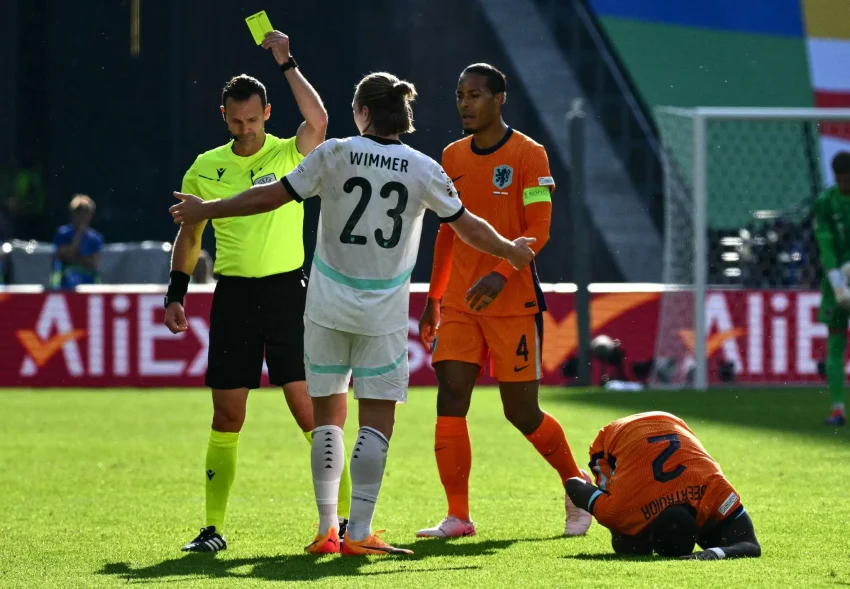
Cards markets concern disciplinary events such as yellow cards and red cards. Depending on the market, the selection may involve the total number of cards or the cards shown to a particular team.
A hypothetical total-cards line of 3.5 would generally require four or more qualifying cards for an Over selection to succeed. Always check the bookmaker’s settlement rules because not every market counts cards in exactly the same way.
Several factors may affect disciplinary patterns:
- The teams’ tackling and pressing styles.
- The importance and intensity of the fixture.
- The likelihood of counterattacks and tactical fouls.
- The referee’s approach to managing challenges and dissent.
- The players expected to start.
A derby or high-pressure fixture may attract attention because of its intensity, but reputation alone does not establish how many cards will be shown. Refereeing decisions and match events remain uncertain.
Team and referee statistics can provide background, but historical averages cannot guarantee the outcome of a cards market.
9. Asian Handicap Explained
Asian Handicap markets adjust the starting position of teams for settlement purposes. Depending on the line, the market may remove the draw as a losing outcome or allow part of a selection to be settled differently.
A simple example is a team with a -1 Asian Handicap. Under standard rules, that team generally needs to win by at least two goals for the full selection to win.
- A two-goal or greater victory generally wins.
- A one-goal victory typically results in a push, meaning the stake is returned.
- A draw or defeat generally loses the selection.
Quarter-goal handicaps, such as -0.25 or +0.75, divide the stake across adjacent handicap lines. These can produce split outcomes, so the settlement rules should be understood before placing a selection.
Handicap markets are not the same as simply predicting which team will win. The margin of victory and the precise handicap line affect settlement.
If you are unfamiliar with the difference between decimal odds and possible returns, review our football betting in Nigeria beginner’s guide.
10. First-Half and Second-Half Markets
Some football markets apply to a specific part of the match rather than the full 90 minutes.
First-half markets may cover the result, goals or other events before half-time. Second-half markets focus on the relevant period after the break, subject to the platform’s stated rules.
The distinction matters because a team that dominates early may not maintain the same intensity throughout the match. Substitutions, fatigue, tactical adjustments and the current score can influence the second half.
For example, a team leading 1–0 at half-time may adopt a more cautious approach, while the trailing team may push more players forward. That could create more attacking opportunities, but it does not guarantee additional goals.
Always confirm whether the market covers the first half, second half or the full match, and how added time is treated.
11. Correct Score and Goal-Related Markets
Correct Score markets require a prediction of the exact final score, such as 1–0, 2–1 or 3–2.
Because many different scorelines are possible, these markets require a more specific prediction than broader goal-related selections.
Goal-related markets ask broader questions. Over/Under markets concern the total number of goals, while Both Teams to Score asks whether both sides will score at least once.
These markets should not be treated as interchangeable. A match can finish 2–0 and produce an Over 1.5 Goals result while a BTTS Yes selection loses.
When comparing markets, begin with the event each one measures. Then consider the relevant statistics and uncertainty involved, rather than choosing a selection simply because its odds appear attractive.
12. How to Compare Football Betting Markets on 8xbet
When exploring 8xbet sports betting or another football betting platform, focus on understanding the displayed market and its conditions.
Before making a selection:
- Confirm that the market refers to the intended match and time period.
- Read the full selection and handicap line.
- Check the displayed odds and applicable settlement rules.
- Understand whether a push, void or partial settlement is possible.
- Avoid assuming that a familiar market name always means identical rules across platforms.
You can also read our 8xbet sports betting guide for related information about sports betting.
If you are comparing platforms, use verifiable information about their terms, market descriptions and available support. Do not assume that a particular market is available, or that its conditions are identical everywhere, without checking the current information provided by the platform.
13. Common Mistakes When Choosing Football Markets
One common mistake is selecting a market without understanding how it is settled. A corners selection and a match-result selection depend on different events, even though they relate to the same fixture.
Another mistake is relying on a small sample of results. A team recording many corners in two matches does not establish that the same pattern will continue.
It is also easy to confuse odds with probability. Odds show a price for a selection, but they do not guarantee that the event will occur. The bookmaker’s margin and the assumptions built into the price also matter when comparing markets.
Finally, combining many selections does not automatically make a bet more valuable. Each additional condition introduces another way for a selection to fail.
Frequently Asked Questions About Football Betting Markets
What are football betting markets?
Football betting markets are different types of selections based on events or outcomes in a football match. Examples include match results, goals, corners, cards, handicaps and correct scores.
What does 1X2 mean in football betting?
1X2 represents three possible match-result selections: 1 for a home win, X for a draw and 2 for an away win.
What is the difference between 1X2 and Double Chance?
1X2 offers three individual outcomes, while Double Chance combines two possible outcomes into one selection. For example, 1X covers a home win or draw.
What does Over 2.5 Goals mean?
Over 2.5 Goals means the match must produce at least three goals in the specified period for the selection to win.
What does BTTS mean?
BTTS means Both Teams to Score. BTTS Yes requires both teams to score at least once, while BTTS No wins if at least one team fails to score.
What is the difference between total corners and team corners?
Total corners count the qualifying corners taken by both teams combined. Team corners focus only on the corners taken by one specified team.
What is Asian Handicap in football betting?
Asian Handicap adjusts a team’s starting position for settlement purposes. Depending on the handicap line, a selection may win, lose, be pushed or be partially settled.
Are football betting markets the same on every platform?
Not necessarily. Market availability, descriptions and settlement rules can differ between platforms. Always read the specific rules that apply to the selection.
Conclusion
Football betting markets cover much more than the final match result. From 1X2 and Double Chance to Over/Under Goals, BTTS, corners, cards, Asian Handicap and Correct Score, each market measures a different event and has its own settlement conditions.
Understanding these differences helps you interpret a betting slip and compare market descriptions more carefully. Whether you are researching 8xbet sports betting or another platform, verify the current terms instead of assuming that every market works in the same way.
Football remains unpredictable, and statistical analysis cannot remove the risk involved in betting. Set a firm spending limit, never stake money needed for essential expenses and do not treat betting as a source of guaranteed income.
This article is for informational purposes only. Betting involves financial risk, and no market or strategy guarantees a profit.